

Consider the following scenarios for an auto repair shop that relies on a Voice AI Agent for handling enquiries and bookings:
Scenario 1: Customer Calling After Hours.
Without Time Awareness.
Customer: “Hi, my car broke down. Can I bring it in?”
AI Agent: “Yes, bring it in.”
Problem: The AI Agent doesn’t realize the shop is closed. The customer may arrive at locked doors, leading to frustration and loss of trust.
With Time Awareness.
Customer: “Hi, my car broke down. Can I bring it in?”
AI Agent: “I’m sorry to hear that. Our shop is closed right now and will reopen at 9 AM tomorrow. I can take your details and schedule you for the first available slot, or share our towing partner’s number if you need help tonight.”
Impact: Sets the right expectations, offers practical solutions, and protects customer trust.
Scenario 2: Customer Calling During Business Hours (Weekday, 9 AM – 5 PM).
Without Time Awareness.
Customer: “Can I get my brakes checked today?”
AI Agent: “Yes, today works. I’ll book you in.”
Problem: The AI Agent confirms the booking without checking the shop’s real-time availability. This can cause overbooking or long wait times.
With Time Awareness.
Customer: “Can I get my brakes checked today?”
AI Agent: “Yes, we’re open until 5 PM today. I see availability at 2:30 PM this afternoon or tomorrow morning at 9 AM. Which option works best for you?”
Impact: Aligns booking with current business hours, avoids overcommitments, and gives the customer clear choices.
Scenario 3: Customer Calling on a Weekend (Saturday or Sunday)
Without Time Awareness.
Customer: “Can I book a service for tomorrow?”
AI Agent: “Yes, tomorrow works. I’ll confirm your booking.”
Problem: The Agent doesn’t recognize that tomorrow is Sunday, when the shop is closed. This creates false commitments and customer frustration.
With Time Awareness.
Customer: “Can I book a service for tomorrow?”
AI Agent: “Our shop is closed on weekends. The next available slot is Monday at 9 AM. Would you like me to reserve that for you?”
Impact: Prevents booking errors, communicates business hours clearly, and helps the customer plan realistically.
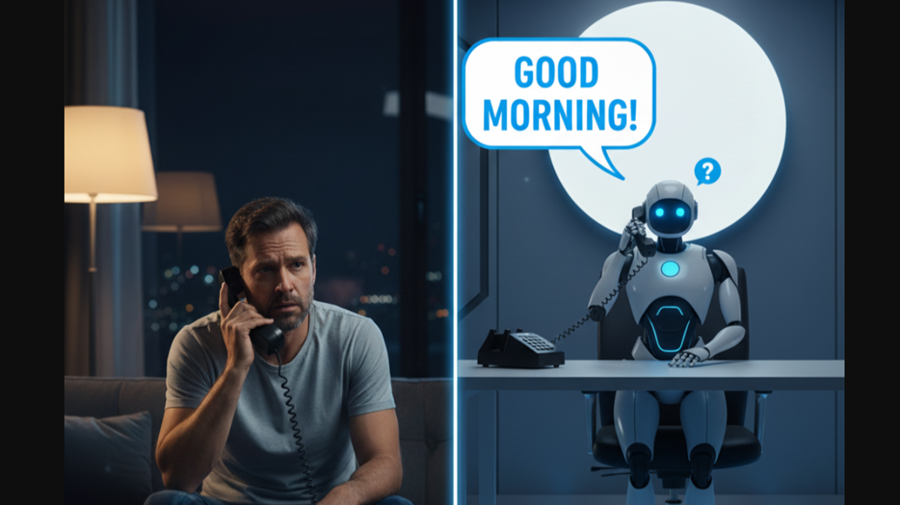
Scenario 4: Wrong Greeting.
Without Time Awareness.
Time: 4:00 PM (shop open)
Customer: calls in.
AI Agent: “Good morning! Thanks for calling Bravo Auto Repair.”
Problem: The AI Agent greets the customer with the wrong time of day. It feels robotic and unprofessional, making the customer doubt whether they’re speaking with a “real” assistant.
With Time Awareness.
Time: 4:00 PM (shop open)
Customer: calls in.
AI Agent: “Good afternoon, thanks for calling Bravo Auto Repair. We’re open until 5 PM today. How can I help you with your vehicle?”
Impact: The AI Agent greets the customer naturally, matches the current time of day, and reassures them that the shop is still open for service.
By default, AI Agents are unaware of the current date and time.
AI agents aren’t naturally aware of the current date and time because they are pattern generators, not sensors.
If you want them to know the time, you have to explicitly feed them that information (via prompts, APIs, or workflow integrations).