

‘utm_medium’ is a key of a UTM parameter which is used to send information related to the traffic medium of a custom campaign to GA4.
Its value should be something which denotes the traffic medium (i.e. the category of the traffic).
The traffic medium can be system-defined or user-defined.
A System defined traffic medium is the one which Google Analytics already recognize as the known category of traffic (i.e. medium)
The following are examples of system-defined traffic mediums:
- organic
- none
- social
- referral
- cpc
- ppc
- banner
- email etc
Generally, the category of the traffic which is expected to refer traffic to your website is used as the value for ‘utm_medium’.
So if you are expecting to get traffic from a social media website like ‘Linkedin’, you can use ‘social’ as the value of ‘utm_medium’.
Example:
utm_medium=social
Similarly,
If you are expecting to get traffic from an email newsletter campaign, you can use ‘email’ as the value of ‘utm_medium’.
Example:
utm_medium=email
When you use a system defined traffic medium as the value for your ‘utm_medium’ key, Google may group the traffic from custom campaign with one of the system defined traffic medium.
For example, consider the following custom campaign:
https:..//www.abc.com/?utm_source=google&utm_medium=organic&utm_term=car-insurance&utm_content=text-ad&utm_campaign=car-insurance-promo-feb
Here, the traffic source is ‘google’, and the medium is ‘organic’.
Here is how GA4 will report on this traffic medium:
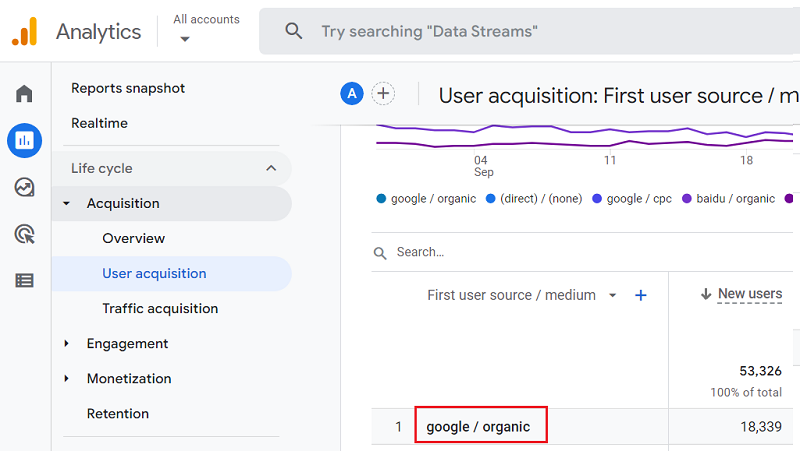
So Google Analytics will include the traffic from this custom campaign under Google Organic Search.
All system defined traffic medium in Google Analytics are (by default) in lowercase and case sensitive.
So for Google Analytics, the traffic medium ‘organic’ is different from ‘Organic’.
Once you change the case /spelling of a system defined traffic medium, it becomes a user defined traffic medium and is reported separately by Google Analytics.
For example, consider the following custom campaign:
https://www.abc.com/best-seo-contract-in-the-world/?utm_source=google&utm_medium=Organic&utm_campaign=seo+contract
Here, the traffic source is ‘google’, but the traffic medium is ‘Organic’ (and not ‘organic’).
So Google Analytics will report the traffic from this custom campaign like the one below:
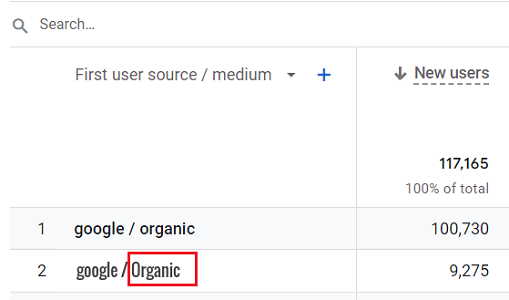
So,
If you are planning to use a system-defined traffic medium as the value of the ‘utm_medium’ key, then be very careful about how you spell the traffic medium and what case (lowercase, uppercase, camelcase) you use.
One small mistake and your system-defined traffic medium will be treated as user-defined traffic medium by GA4.
A user defined traffic medium is the one which is defined by people like me and you and which is by default, not recognized by Google Analytics.
For example, consider the following URL:
https://www.abc.com/?utm_source=facebook&utm_medium=paidsocial&utm_content=mobile-ad&utm_campaign=car-insurance-promo-feb
Here, ‘paidsocial’ is a user-defined traffic medium.
Here is how GA4 will report on this traffic medium:
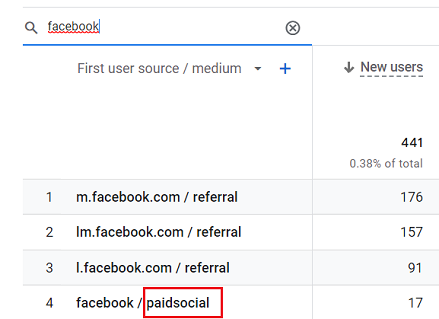
Technically speaking, you can use any number, text or combination of ‘number and text’ as the value for the ‘utm_medium’ key.
Where can you find the values of the ‘utm_medium’ key in GA4?
You can see the values of the ‘utm_medium’ key in GA4 through the following dimensions:
- Medium
- First user medium
- Session medium
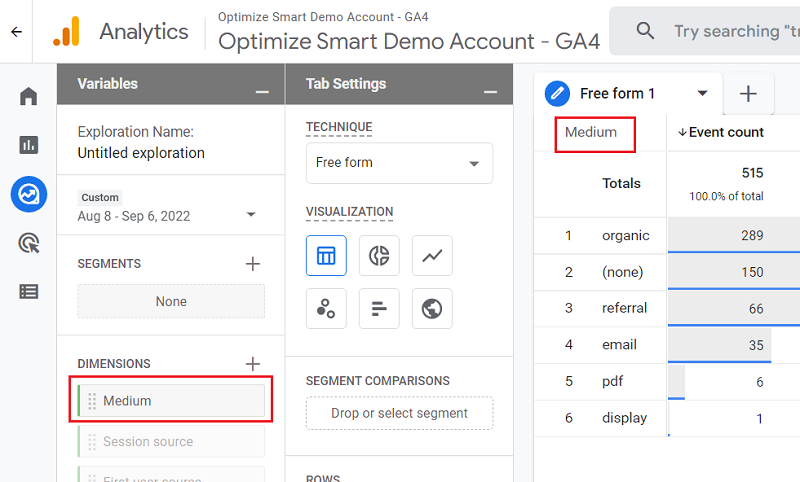
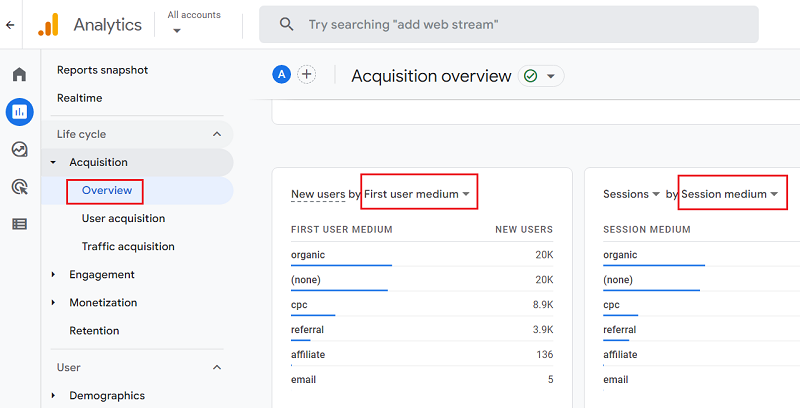
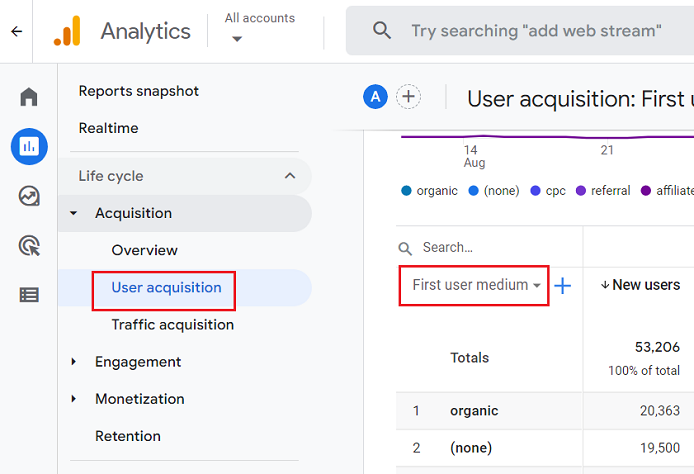
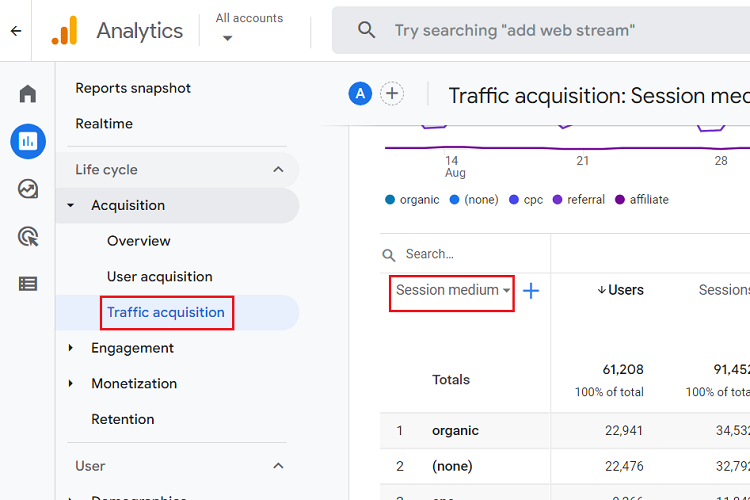
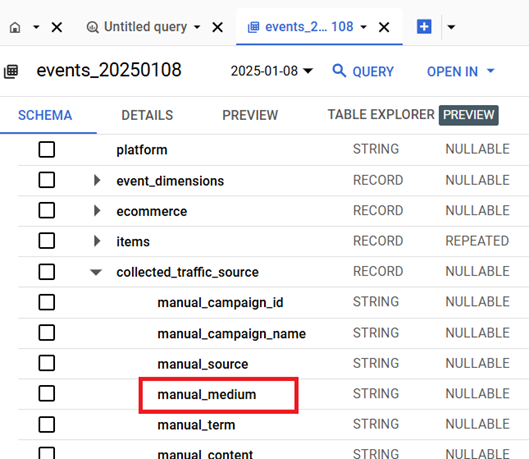
Where can you find the value of the ‘utm_medium’ key in GA4 BigQuery?
You can find the value of the ‘utm_medium’ key in GA4 BigQuery via the ‘manual_medium‘ field under ‘collected_traffic_source‘:

Other Articles on GA4.
- Google Analytics 4 often report inflated conversion counts by default.
- The Best Reporting Identity for Google Analytics 4.
- 'Days to key events' metric in Google Analytics 4.
- Advertising Reports in Google Analytics 4.
- Google Analytics 4 Data Delays Guidelines.
- Data deletion requests in Google Analytics 4 (GA4).
- How to Mix GA4 Dimensions & Metrics of Different Scopes?
- The best platform for GTM Server Side Tagging.
- Use the Data Manager API instead of the Measurement Protocol.
- utm_id (Campaign ID) in Google Analytics 4.
- utm_source (campaign traffic source) in Google Analytics 4.
- utm_medium (campaign traffic medium) in Google Analytics 4.
- utm_campaign (campaign name) in Google Analytics 4.
- utm_term (campaign term) in Google Analytics 4.
- utm_content (campaign content) in Google Analytics 4.
- utm_source_platform in Google Analytics 4.
- utm_campaign_id in Google Analytics 4.
- utm_creative_format in Google Analytics 4.
- utm_marketing_tactic in Google Analytics 4.
- Filter Google Analytics 4 Reports by UTM Parameters.