

Note: At the time of publishing this article, all form interaction data collected via enhanced measurement in GA4 is completely way off.
In the case of our website, GA4 was reporting thousands of form submissions a day which is not possible.
For now, you should set up form tracking in GA4 via Google Tag Manager.
What is GA4 form interaction tracking in enhanced measurement?
If you have enabled enhanced measurement tracking in your GA4 property, you should see a new setting for form tracking:
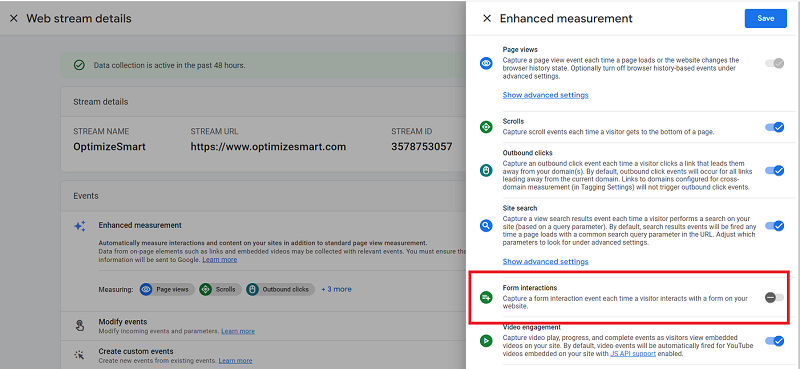
Through the GA4 form interactions tracking feature, you can track form submissions in your GA4 property without any additional code or tagging.
Not only can you track form submissions, but you can also determine the number of users who interacted with the form but did not submit form.
If you are collecting form leads via your website/app, then the GA4 form interaction tracking feature is for you.
What is required in order to set up GA4 form interactions tracking?
If you do not have one or more working forms embedded on your website, then you won’t be able to benefit from the form interaction tracking feature in GA4:
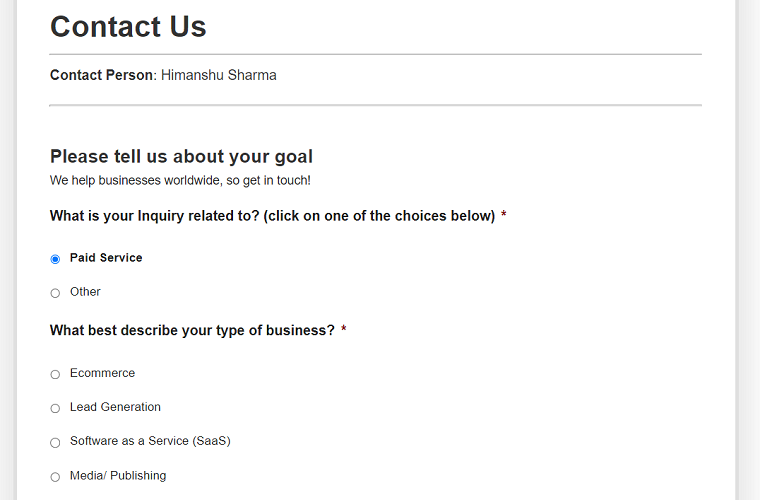
So you need to have one or more forms embedded on your website.
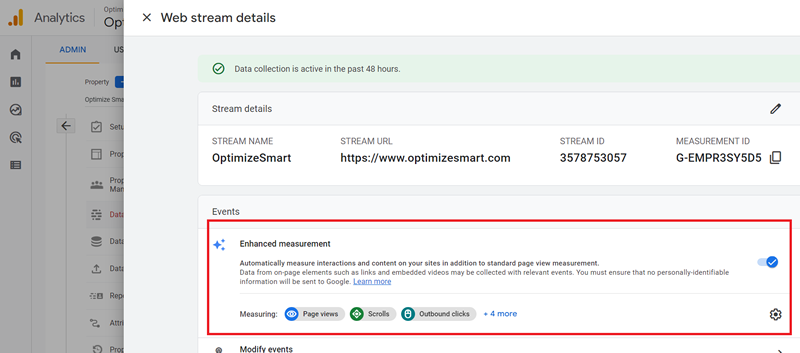
GA4 automatically tracks form interactions (via ‘form_start’ and ‘form_submit’ events) once you have enabled Enhanced Measurement Tracking in your GA4 property:
How to set up form interactions tracking in Google Analytics 4 via enhanced measurement?
Follow the steps below:
Step-1: Navigate to your GA4 Property.
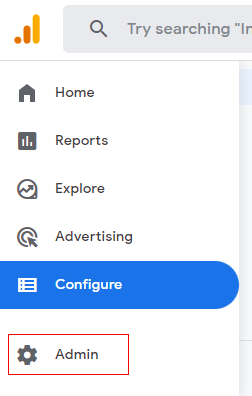
Step-2: Click on the ‘Admin’ link available in the left-hand side reporting menu:
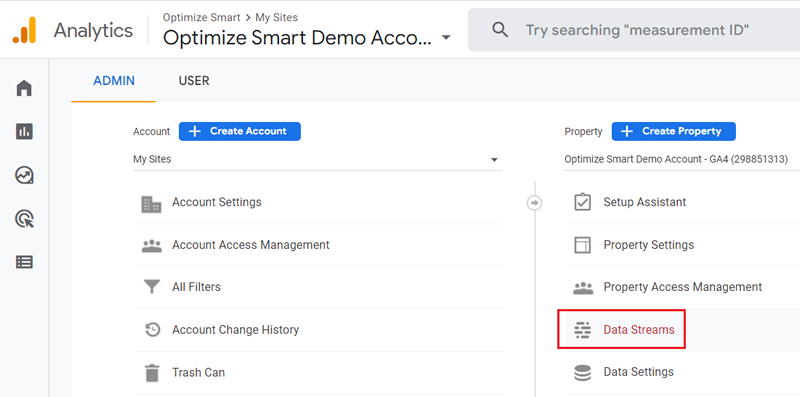
Step-3: Click on ‘Data Streams’ under the ‘Property’ column:
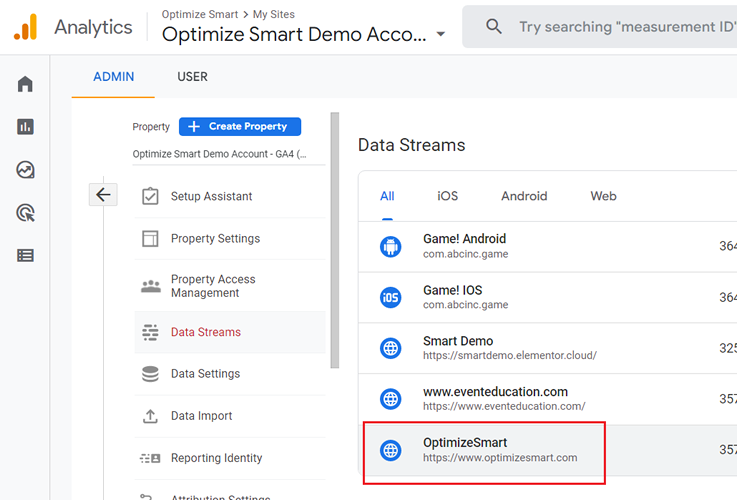
Step-4: Click on the web data stream for which you want to set up form interaction tracking in GA4:
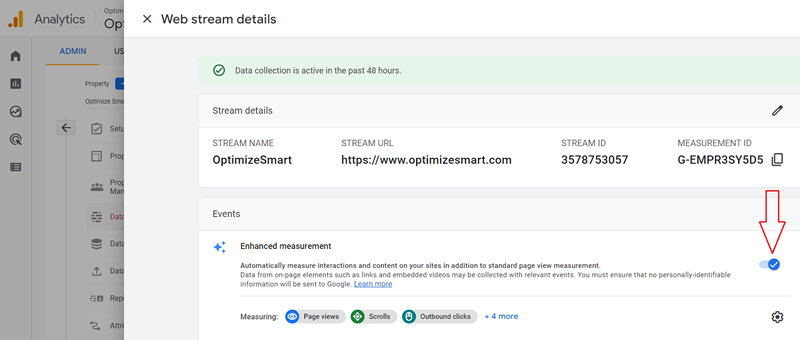
Step-5: Make sure that the ‘Enhanced Measurement’ featured is enabled:
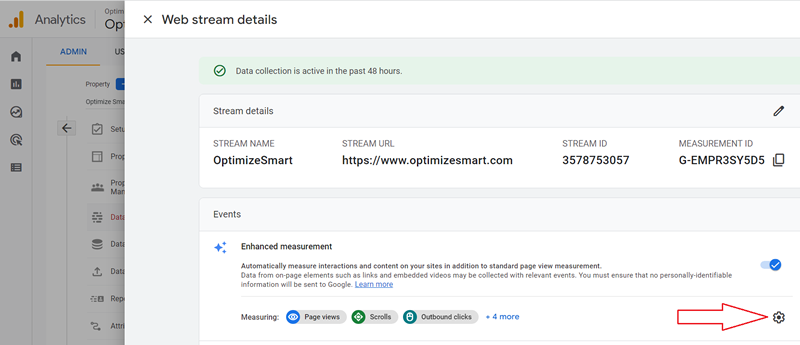
Step-6: Click on the gear button under ‘Enhanced measurement’ to access the settings menu:
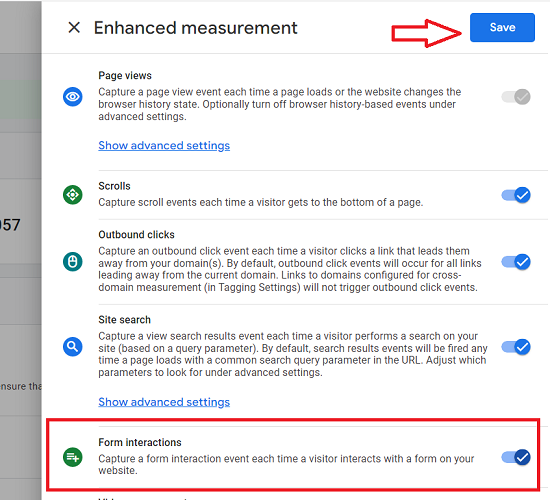
Step-7: Click on the toggle button next to ‘Form interactions‘ and then click on the ‘Save‘ button:
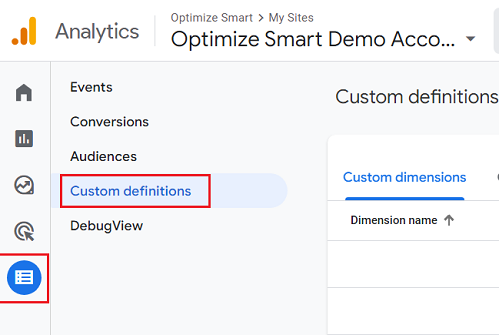
Step-8: Navigate to Configure > Custom definitions report in your GA4 property:
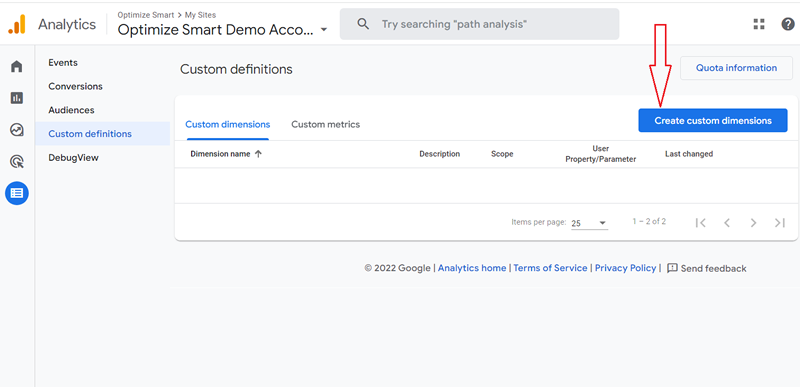
Step-9: Click on the ‘Create custom dimensions’ button:
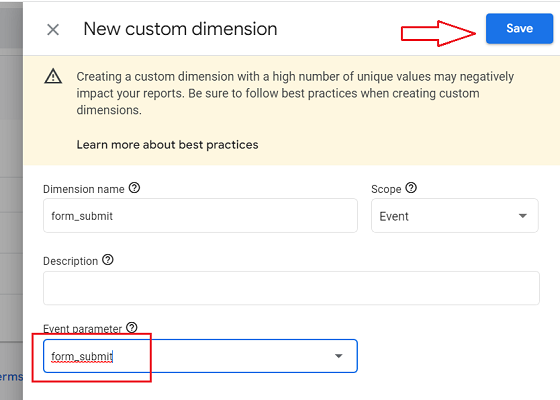
Step-10: Enter ‘form_submit’ as the dimension name:
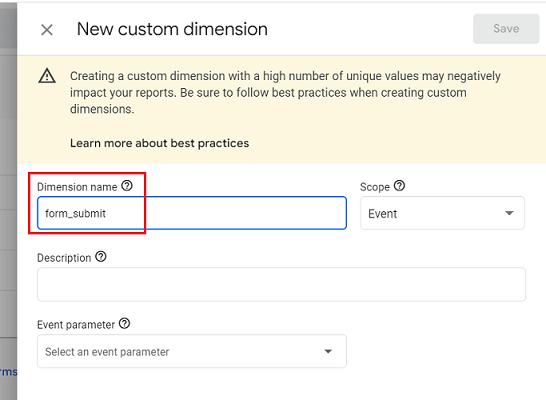
Step-11: Type ‘form_submit’ in the text box under the event parameter and then click on the ‘save’ button:
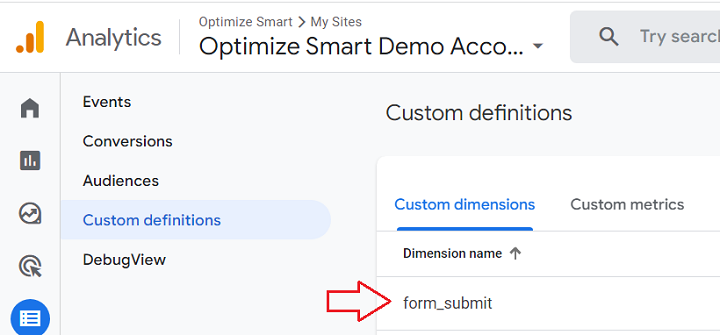
You will now see the ‘from_submit’ listed as a custom dimension:
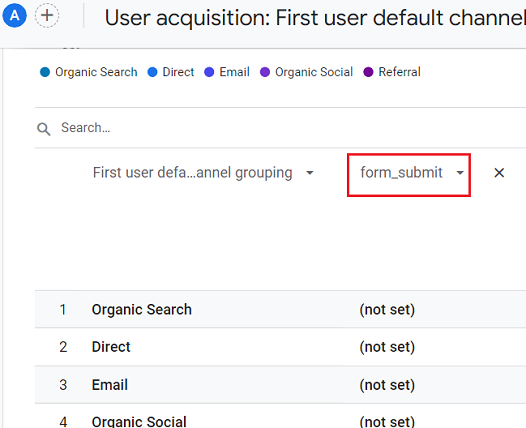
We have registered ‘form_submit’ as a custom dimension so that it becomes available in various GA4 reports as the secondary dimension:
How to see form interactions data in GA4?
There are two ways you can see the data related to form interactions in GA4:
- Through the ‘Events’report
- By creating an exploration report.
Finding form interactions data through the ‘Events’ report
Follow the steps below:
Step-1: Once you have enabled the form interactions tracking in your GA4 property, wait for at least 24 hrs to gather form interactions data in your reports.
Step-2: Navigate to Reports > Engagement > Events
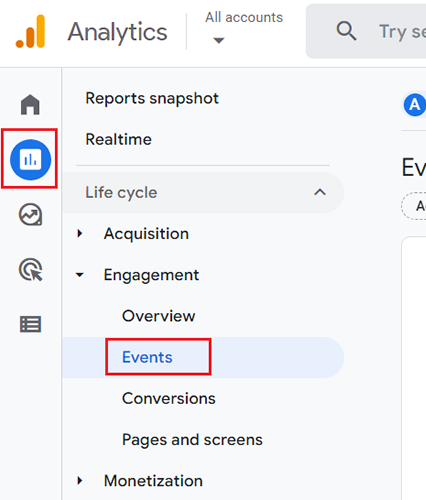
Step-3: Scroll down to the data table. You should now be able to see the form interactions data:
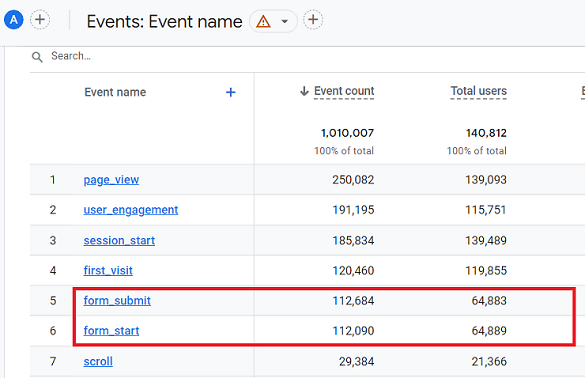
The ‘form_submit’ event is fired when a user submits a form embedded on your website.
The ‘form_start’ event is fired when a user interacts with a form embedded on your website for the first time in a GA4 session.
You can use these two form events to compare the number of users who started to fill out a form vs the users who submitted the form.
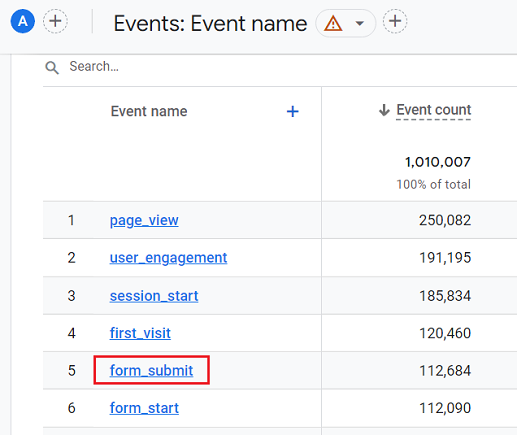
Step-4: Click on the event name ‘form_submit’:
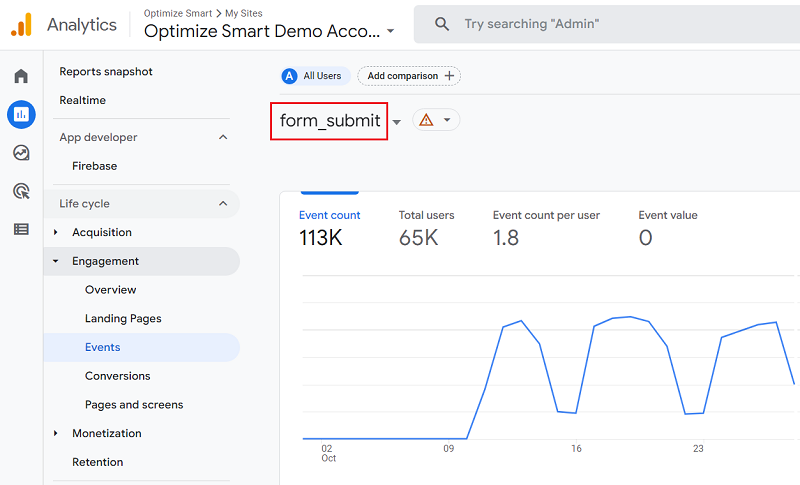
You should now see the detailed report for the event ‘form_submit’:
Finding form interactions data by creating an exploration report
Follow the steps below:
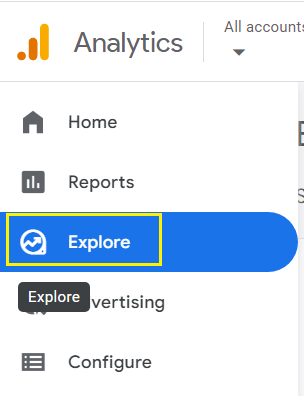
Step-1: Click on the ‘Explore’ link from the left-hand side navigation bar in your GA4 property:
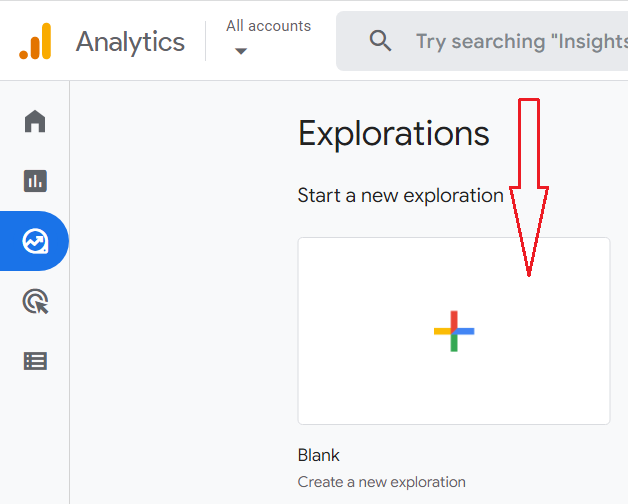
Step-2: Click on the ‘Blank’ exploration report template:
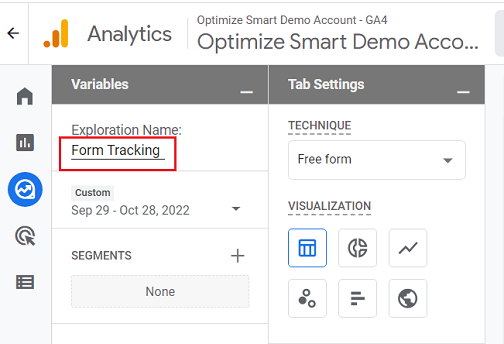
Step-3: Name your report ‘Form Tracking’:
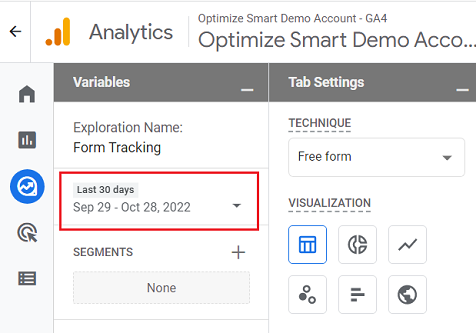
Step-4: Set the date range to the last 30 days:
Step-5: Click on the + button next to ‘DIMENSIONS‘:
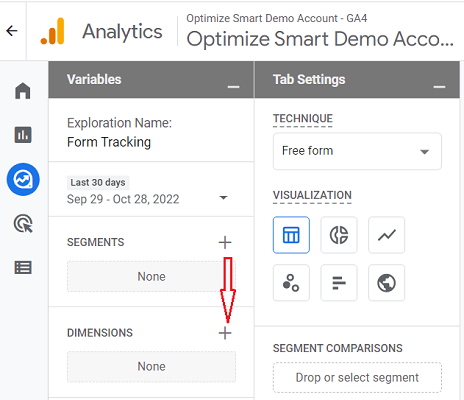
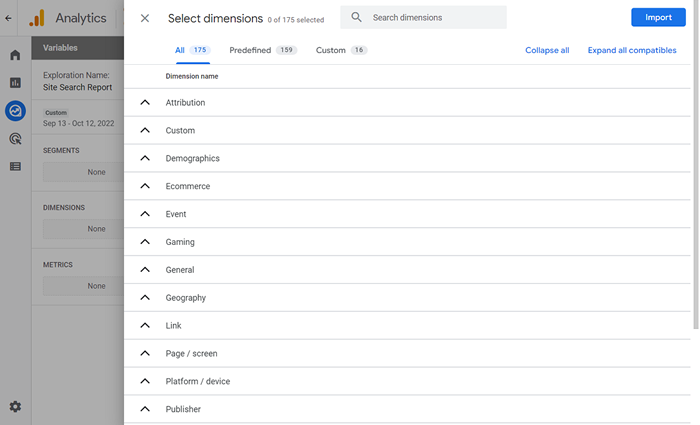
You will now see a screen like the one below:
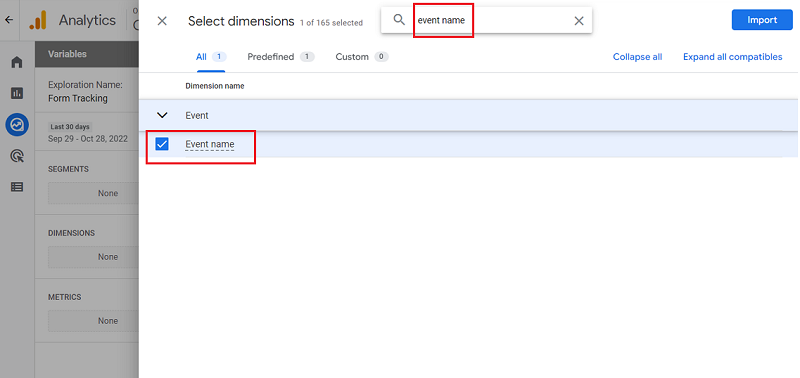
Step-6: Search for the ‘Event Name’ dimension and then click on the checkbox next to it:
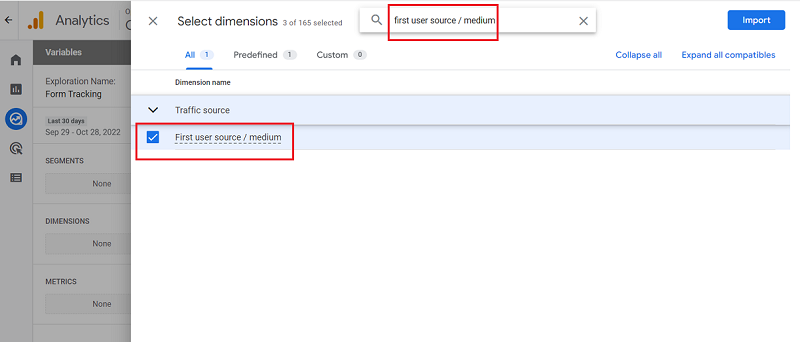
Step-7: Search for the ‘first user source / medium’ dimension and then click on the checkbox next to it:
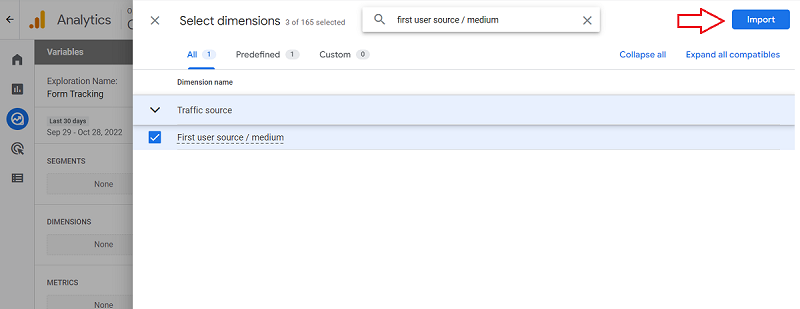
Step-8: Click on the ‘Import’ button to import all the selected dimensions to the report:
You should now see all the imported dimensions listed under the DIMENSIONS section:
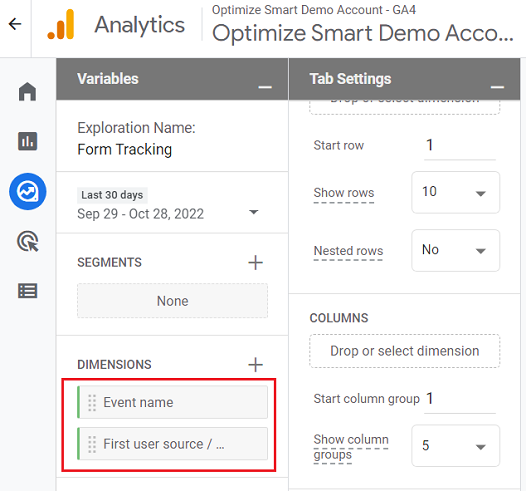
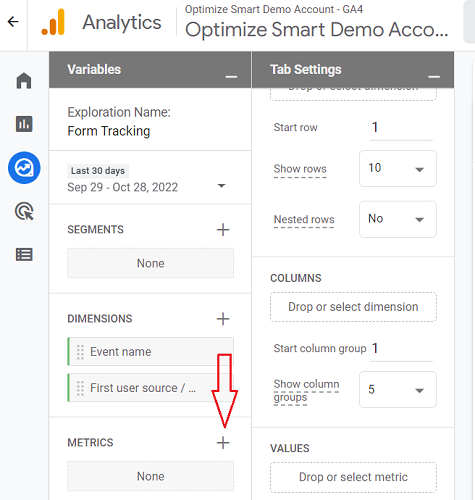
Step-9: Click on the + button next to METRICS:
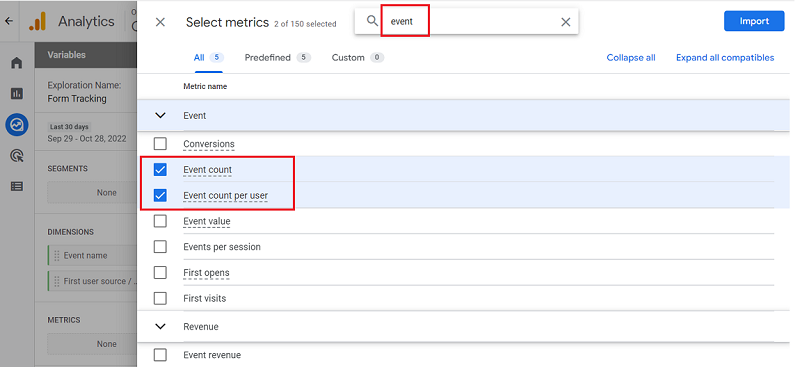
Step-10: Search and select the following metrics one by one in the exact order as mentioned below and then click on the ‘Import‘ button:
- event count
- event count per user
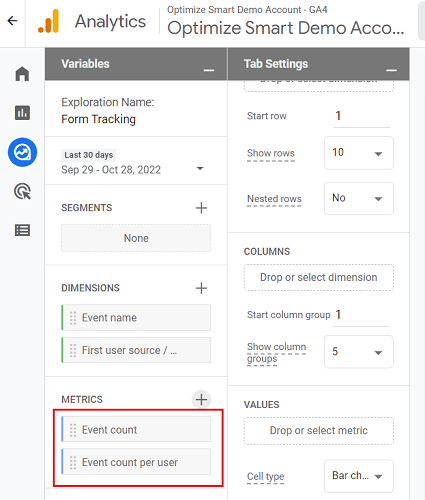
You should now see all the imported metrics listed under the METRICS section:
Step-11: Double-click on the dimension ‘Event Name’ so that it is automatically added to the Rows section:
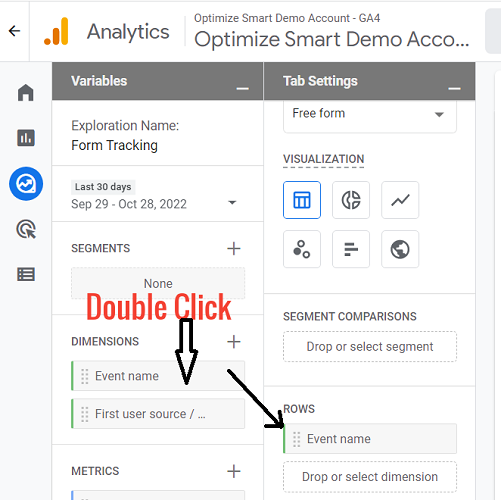
Step-12: Double-click on the dimension ‘First user source / medium’ so that it is automatically added to the Rows section:
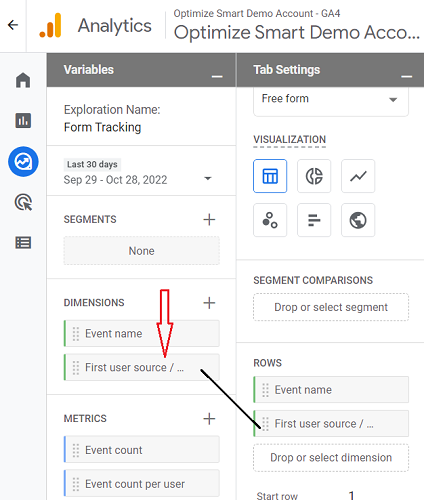
Note: When you double-click on the dimensions, you won’t see any change to the canvas on the right. But the dimension has been added to the canvas. Only when you start adding metrics to the canvas will you start seeing the dimension(s) added to the canvas.
Step-13: Double click on the following metrics one by one, starting from the very top, so that they are automatically added to the blank canvas on the right:
- event count
- event count per user
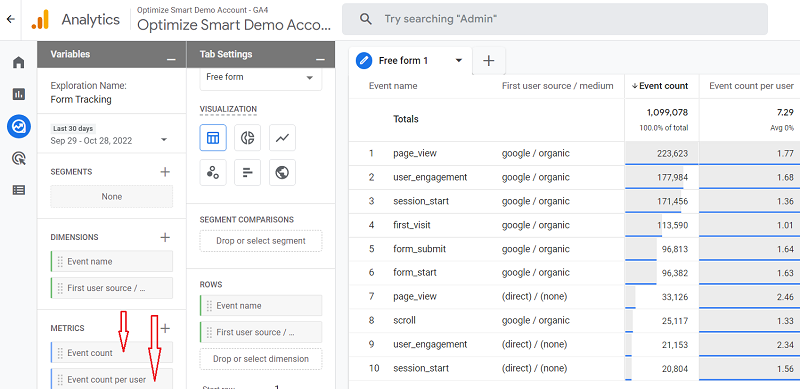
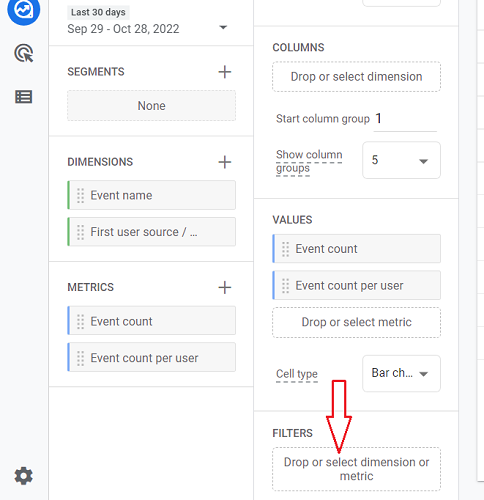
Step-14: Scroll all the way down under the ‘Tab Settings’ column until you see the section called ‘FILTERS’:
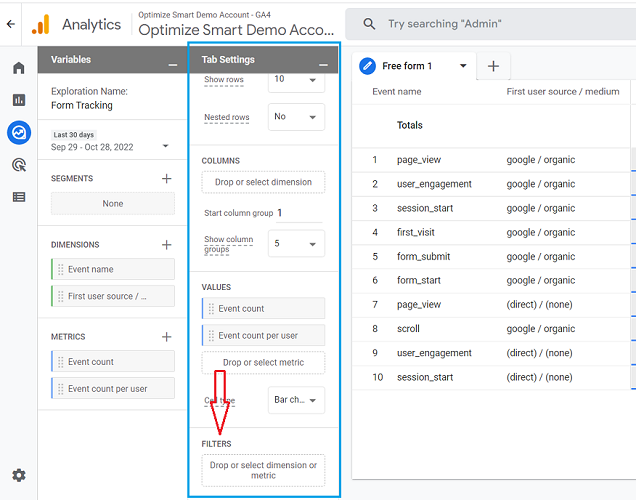
Step-15: Click on ‘Drop or select dimension or metric’:
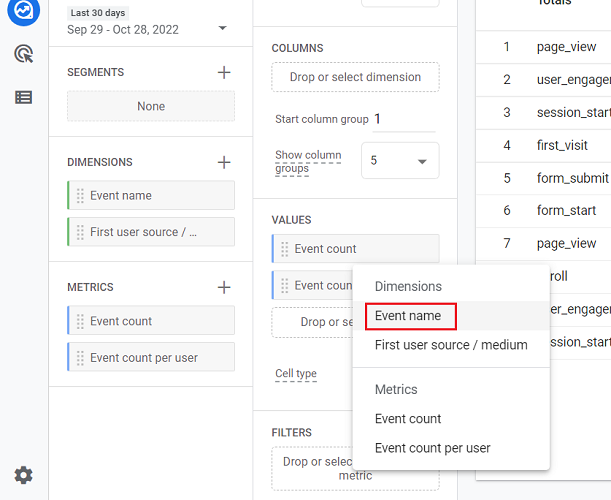
Step-16: Click on the ‘Event Name’ dimension from the drop-down menu:
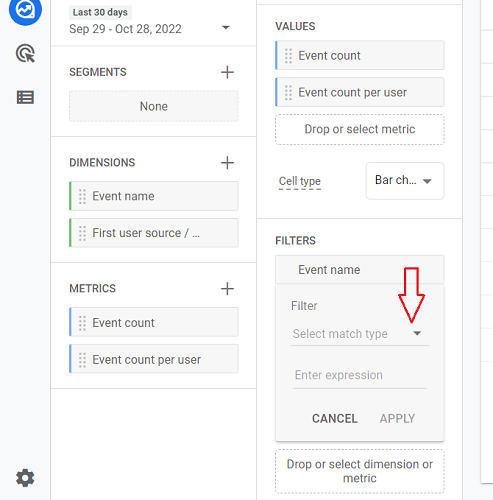
Step-17: Click on the ‘Select match type’ drop-down menu:
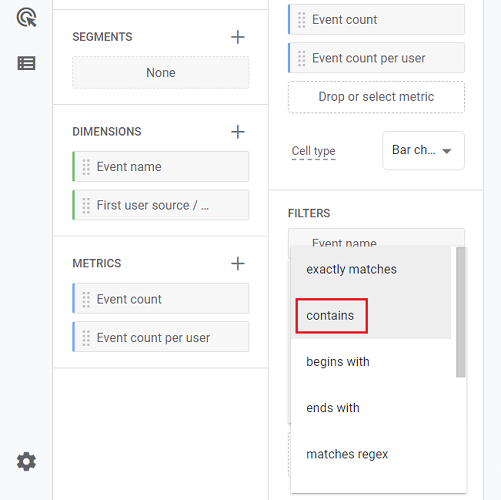
Step-18: Click on ‘contains’:
Step-19: Click on the ‘enter expression’ text box:
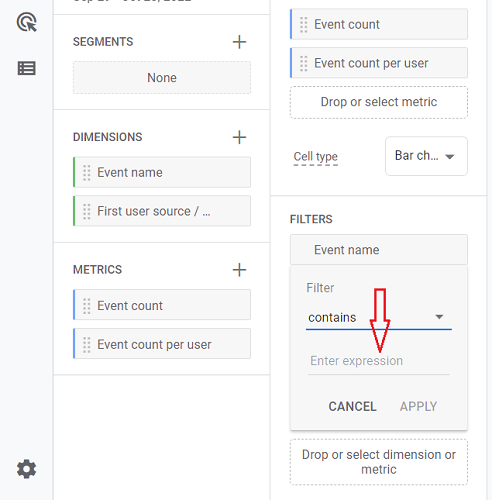
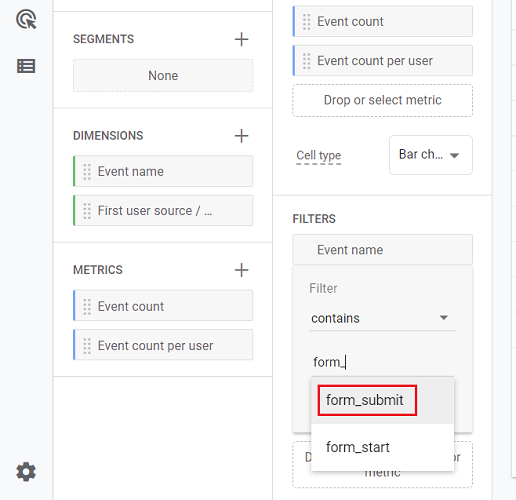
Step-20: Type ‘form_’ in the text box and then click on the first search result ‘form_submit‘:
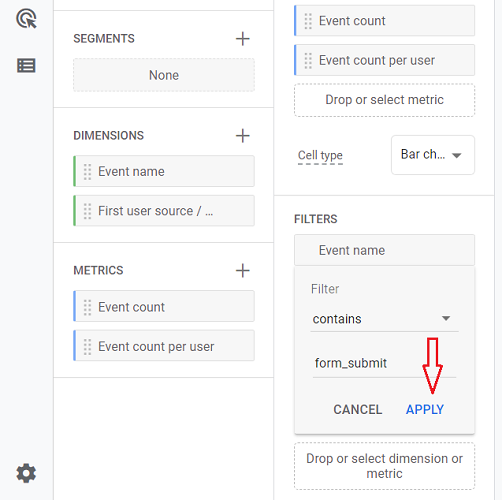
Step-21: Click on the ‘Apply’ button to apply your filter to the canvas on the right:
You should now see a screen like the one below:
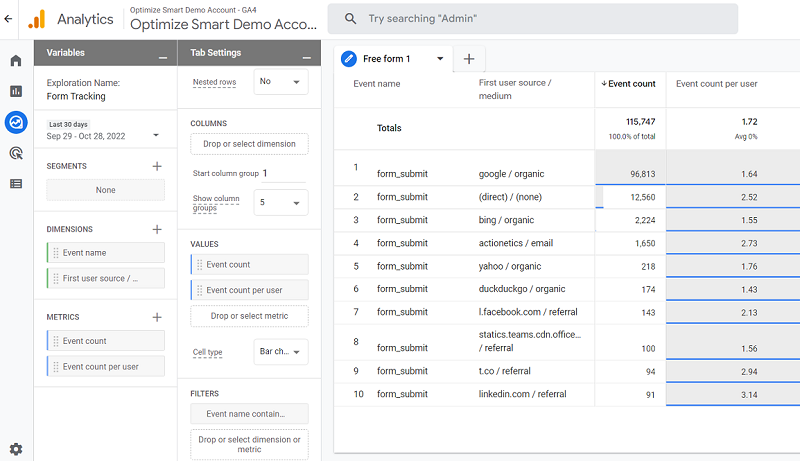
That’s how you can see the form interactions data via the exploration report.
Accuracy of the form interactions tracking data in enhanced measurement
At the time of publishing this article, the accuracy of the form interactions tracking data in GA4 is incorrect.
GA4 track form submissions even when a user does not submit the form.
All form interaction data collected by GA4 automatic form interaction tracking is completely way off.
In the case of our website, GA4 was reporting thousands of form submissions a day which is not possible.
For now, you should not enable this tracking feature:
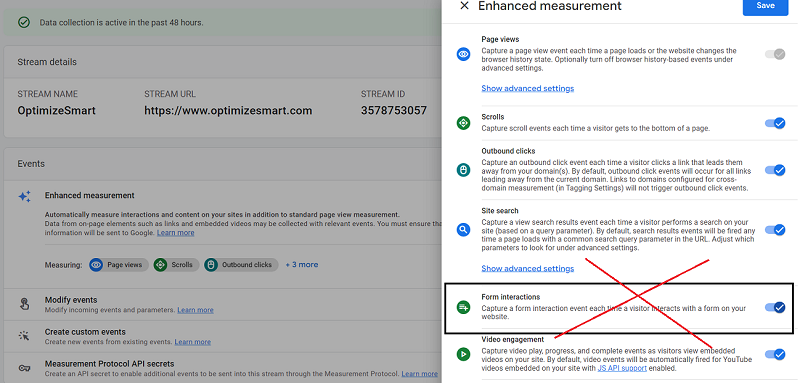
Otherwise, it could inflate your overall event count.
However, this situation is unlikely to remain the same in the near future.
The GA4 team would sooner or later fix this tracking issue, and hopefully, we would see more accurate form tracking data in GA4 reports.
For now, use Google Tag Manager to set up form tracking in GA4.

Other Articles on GA4.
- Google Tag Manager Tutorial.
- GA4 Attribution Models Explained: How to Choose the Right One.
- Looker Studio (Google Data Studio) Tutorial.
- Google Tag Manager Data Layer Tutorial with Examples.
- Set up enhanced conversions for Web using ‘Code’ in Google Tag Manager.
- How to create Google Ads report in Google Analytics 4.
- Google Tag Manager Audit Checklist.
- Tracking Site Search in Google Analytics 4.
- How to see Organic Search Keywords in Google Analytics 4.
- How to use User Lifetime report in Google Analytics 4 (GA4).
- Web Analytics Career Path – How to Become a Web Analyst.
- GA4 Form Interactions Tracking – Enhanced measurement.
- How to track form submissions in Google Analytics 4.
- How to send data from Google Search Console to BigQuery.
- How to fix duplicate events in Google Analytics 4 (GA4).
- How to use two Google Analytics codes on one page.
- How to import GA4 Conversions into Google Ads.
- What are predictive metrics in Google Analytics 4 (GA4).
- Google Tag Manager Event Tracking Tutorial.
- How to use Google Analytics 4 with iframe.